Executive summary
What this assessment examines
Research purpose. This article tests a strategic-foresight proposition: whether Pakistan's expanding external defence role could expose it to military pressure beyond its borders before another conventional war reaches Pakistani territory.
The Makkah Alliance gives Pakistan a real Saudi defence obligation at the same time that the Afghan frontier is already consuming military attention. The risk is dispersion, not simply another declared enemy.
If Pakistan's Saudi role becomes operational, retaliation would not need to begin on Pakistani soil. Personnel, bases, aircraft, shipping or logistics outside Pakistan could become the more accessible pressure points.
Pakistan's Iran channel and emerging defence links with Somalia increase its strategic usefulness, but also make restraint harder: the more theatres Islamabad can influence, the more theatres it may be expected to help manage.
Competing interpretation. These developments may remain separate. Pakistan can defend Saudi territory, manage its Afghan frontier, preserve relations with Iran and expand bilateral defence ties without any of them combining into a single military burden. The article therefore treats convergence as a testable forecast, not an established fact.
Pakistan has spent decades planning for the war most likely to arrive across its eastern border. The more unusual risk now is that its next serious military burden may begin somewhere else.
The Makkah Alliance has altered Pakistan's external security exposure. On 5 October, Saudi Arabia, Pakistan and Türkiye moved from treaty language toward practical collective defence, including rapid provision of agreed forces and capabilities in Saudi Arabia. Pakistan's Foreign Office later said substantial Pakistani forces and resources were already present in the Kingdom and drew an explicit boundary: those forces could defend Saudi territory but would not cross into Yemen to attack the Houthis. Pakistan Foreign Office
That boundary matters because it creates a new kind of exposure. Pakistan does not have to invade another country to become part of a regional military contest. Once Pakistani personnel, aircraft, sensors or logistics contribute materially to the defence of Saudi Arabia, actors trying to impose costs on Riyadh acquire an incentive to think about Pakistan's role as well.
The exposure widened through separate decisions, not one grand strategy
Figure 1Source: Makkah Alliance chronology based on the official records and reporting cited below. The events are connected analytically; the public record does not establish that they were planned as one integrated strategy.
Saudi defence creates exposure without requiring a Yemen war
Pakistan's most immediate external military obligation is now Saudi Arabia. That does not mean Pakistani aircraft have to strike targets inside Yemen. The more important threshold is whether Pakistani capabilities become materially involved in detecting, intercepting or supporting the defeat of attacks on Saudi territory.
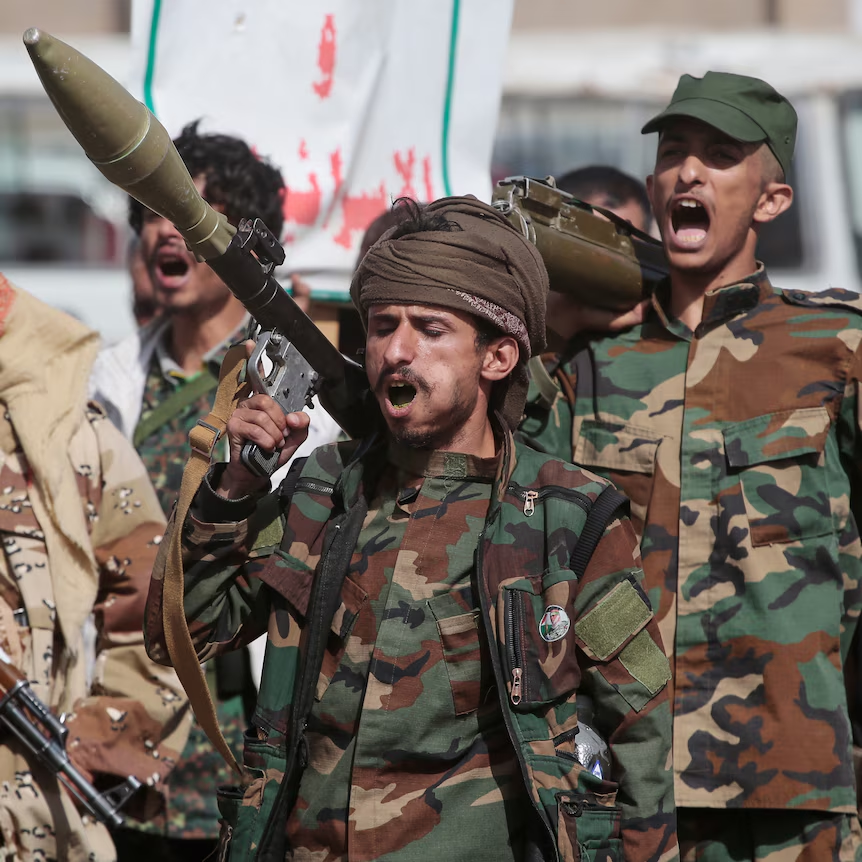
Houthi missiles and drones have already reached Saudi airports, cities and energy infrastructure. Reuters reported on 14 October that the campaign had brought the war directly to Riyadh and was imposing pressure on aviation and critical infrastructure. Reuters
If Pakistan remains behind the defensive line, the most plausible retaliation would not necessarily be an attack on Karachi or Islamabad. A lower-cost response could focus on Pakistani personnel, aircraft, logistics or shipping operating in or around the Gulf. That is an assessment, not a confirmed Houthi plan. At the evidence cutoff, there was no public Houthi declaration naming Pakistan itself as a target.
The distinction matters because it changes the meaning of “war beyond the border”. Pakistan could find itself absorbing military risk abroad while the Pakistani mainland remains outside the immediate theatre.
The Afghan frontier turns every overseas commitment into an opportunity cost
Pakistan does not approach the Gulf from a position of strategic emptiness. Its western frontier is already active. Pakistani airstrikes in Afghanistan on 1 October followed renewed cross-border militancy and competing claims by Islamabad and Kabul over militant sanctuaries and civilian casualties. Reuters
The analytical risk is not that the TTP, Afghan Taliban and Houthis suddenly form a coordinated front. There is no evidence for that proposition. The risk is simpler. An adversary does not need to coordinate with another theatre to benefit from Pakistan being distracted by it.
Every additional air-defence unit, intelligence asset, transport aircraft, specialist team or command attention committed abroad has an opportunity cost. If violence on the Afghan frontier rises while Pakistan is deepening a Gulf deployment, Islamabad has to decide which pressure receives scarce high-readiness capacity first. That kind of simultaneous demand is enough to create strategic strain without any central organiser behind it.

Iran is the hinge Pakistan cannot afford to lose
Pakistan's relationship with Iran sits between the Gulf and the Afghan frontier. Islamabad has tried to preserve it even while warning Tehran about the consequences of Houthi attacks on Saudi Arabia. Reuters reported in September that Pakistan was under growing pressure to balance its Saudi defence commitments with its role as an intermediary with Iran. Reuters
That makes Iran more than another neighbouring relationship. It is the diplomatic hinge that can keep Pakistan's Saudi role from becoming a direct Pakistan-Iran confrontation. If Islamabad can defend Saudi territory while maintaining a usable channel to Tehran, it preserves room to de-escalate. If that channel breaks, Pakistan's western geography becomes much less forgiving.
This is also why claims of an inevitable Sunni-versus-Iran bloc are too crude. Pakistan's strategic problem is almost the opposite. Its value to the Makkah Alliance partly comes from being able to communicate across lines that other members may find harder to cross.

Four directions of exposure, four different mechanisms
Figure 2Saudi defence obligation
Pakistan can acquire operational exposure through air defence, intelligence, logistics or force protection even while staying outside offensive operations in Yemen.
Existing military demand
Militancy and cross-border escalation create a standing requirement for forces, ISR, air power and political attention inside Pakistan's immediate security perimeter.
Diplomatic hinge
Relations with Tehran help Pakistan contain spillover from the Gulf while protecting its own border. Breakdown would narrow its room to balance competing commitments.
Emerging external footprint
Defence cooperation with Somalia expands Pakistan's military relationships toward a maritime theatre that connects the Arabian Sea, Red Sea and Yemen conflict zone.
Source: Makkah Alliance assessment. The four directions are not equivalent threats and should not be read as a probability ranking.

The missile test is a clue about reach, not proof of a new mission
Pakistan's 13 October test of the Fatah-2 Extended Range adds another layer to this picture. The military said the system would extend the Army's reach and improve its ability to engage deep targets. It did not publish an official range figure. Radio Pakistan
The temptation is to attach every new long-range capability to the Makkah Alliance. The evidence does not justify that. The test can be understood first through Pakistan's own deterrence requirements. What it does show is that Pakistan's land-force strike architecture is being built around greater depth at the same time that its political commitments are becoming geographically wider.
Capability and obligation are therefore moving in the same general direction without evidence that one was designed for the other. That is exactly the kind of convergence strategic foresight should watch without turning it into a claim of intent.

Somalia looks peripheral until geography is added
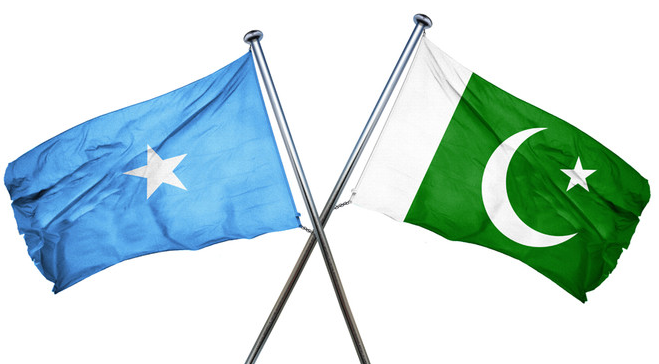
Pakistan and Somalia signed a defence and security cooperation memorandum in August covering counterterrorism, military training, exchange of expertise and defence capability development. In September, a Pakistan Air Force delegation visited Mogadishu to discuss rebuilding the Somali Air Force and strengthening air-defence cooperation. Somali National News Agency
There is no public basis for describing this as a Makkah Alliance deployment or a response to the Yemen conflict. The relevance is geographic. Somalia sits beside the Gulf of Aden and the approaches to Bab al-Mandab, the maritime space through which the Red Sea crisis and Pakistan's Gulf security interests can intersect.
If the relationship remains focused on training and institution-building, it is simply another bilateral partnership. If it later produces air, maritime, surveillance or logistical cooperation around the Gulf of Aden, Pakistan would have a security relationship on the African side of a theatre in which Saudi Arabia and the Houthis are already competing. That is a forecast to test, not a development to assume.
What would strengthen this assessment
External exposure becomes operational
- 01Pakistan confirms a defined combat-support or interception role in Saudi Arabia.
- 02Houthi statements explicitly identify Pakistani forces, assets or territory as targets.
- 03A sustained Afghan-front escalation coincides with Gulf deployments and credible evidence of deliberate exploitation or external direction.
- 04Pakistan-Somalia cooperation develops into recurring air, maritime or surveillance activity near the Gulf of Aden.
What would weaken this assessment
The theatres remain separate
- 01Pakistan's Saudi role stays advisory, defensive and limited in duration.
- 02Houthi attacks continue to focus only on Saudi and Yemeni targets.
- 03The Afghan frontier stabilises without drawing resources away from external commitments.
- 04Somalia cooperation remains a bilateral training and capacity-building programme with no regional operational role.
The more plausible danger is not encirclement. It is accumulation
Pakistan does not need four enemies acting together to face a four-direction problem. Separate crises can produce the same operational effect if they demand attention at the same time.
The Gulf may require air defence and force protection. The Afghan frontier may require strikes, surveillance and ground forces. Iran may require diplomacy precisely when military pressure is rising elsewhere. Somalia may gradually extend Pakistan's defence relationships toward the Red Sea approaches. None of these developments proves a coming war. Together, they change what Pakistan has to be prepared to manage.
The strategic objective of an adversary would not have to be defeating Pakistan conventionally. It could be much cheaper to make Pakistan's external commitments progressively expensive — politically, militarily and economically — until Islamabad has to narrow one of them.
Four ways the thesis could develop
Figure 3Saudi defence stays limited
Pakistan provides defensive support and maintains the Iran channel while the Afghan frontier remains manageable. External exposure rises but stays compartmentalised.
Pressure follows Pakistani assets abroad
A Pakistani operational role prompts threats or attacks against personnel, logistics or shipping outside Pakistan rather than an immediate strike on the mainland.
The Afghan front heats up at the same time
Unrelated or opportunistic escalation forces Pakistan to divide high-readiness capabilities and political attention between domestic and external obligations.
Separate theatres begin interacting
Direct retaliation, border escalation and breakdown with Iran combine, making Pakistan's alliance obligations and homeland security requirements difficult to separate.
Source: Makkah Alliance conditional scenarios. These describe pathways, not probability estimates.
The warning is about where the burden begins
Pakistan's next war does not have to begin with another conventional attack across the Line of Control or the international border. It could begin more ambiguously, with Pakistani forces defending Saudi territory, a drone or missile aimed at an overseas Pakistani position, an Afghan-front escalation occurring at the same moment, or a maritime commitment pulling Pakistan farther toward the Red Sea.
Most of those events would initially look smaller than war. That is the point. Modern alliance obligations can accumulate military exposure before political language catches up with it.
Pakistan's next war may begin beyond its borders not because a distant theatre replaces South Asia, but because Pakistan is becoming militarily relevant to more theatres at the same time.
The evidence as of 15 October does not establish that such a conflict is coming. It establishes the conditions that make the proposition worth testing: a live collective-defence commitment in Saudi Arabia, an active Afghan frontier, an indispensable but difficult Iran relationship, new external defence links and a military investing in longer-range conventional strike capability.
The question is no longer only whether Pakistan can project influence beyond its borders. It is whether the obligations created by that influence begin projecting risk back onto Pakistan.
Method, limits and editorial status
Strategic-foresight analysis using public-source evidence available through 15 October 2026. Confirmed developments are separated from deductions and conditional scenarios.
Methods & Sources →No classified operational information was used. Public reporting does not establish Houthi intent to target Pakistan, coordination among the pressure lines identified here, or the operational range of the Fatah-2 ER.
Official statements establish deployments, policy boundaries and bilateral agreements only within their stated scope. Claims about future retaliation, simultaneous pressure and multi-theatre exposure are Makkah Alliance assessments.
Makkah Alliance is an independent, non-governmental research initiative. Faizan Imam is the author and retains editorial responsibility. No article-specific external funding or conflict has been declared.
Funding & Independence →Sources
The article was originally published on X on 15 October 2026. The Library edition preserves the original analytical thesis while presenting the evidence and forecasts using the Makkah Alliance publication standard. Sources below support the factual premises; the forward-looking conclusions remain Makkah Alliance assessments.
Citation and permanent record
Imam, Faizan. “Pakistan's Next War May Begin Beyond Its Borders.” Makkah Alliance, 15 October 2026. https://makkahalliance.com/articles/pakistans-next-war-beyond-its-borders.html.